

If you’re doing IVF and wondering whether to test your embryos for chromosomes, you’re looking at PGT-A. It’s one of the most debated add-ons in fertility care — praised for reducing miscarriage, questioned for cost and overuse.
Here’s what PGT-A actually does, who benefits most, and what it costs in India in 2026.
What is a pgt test?
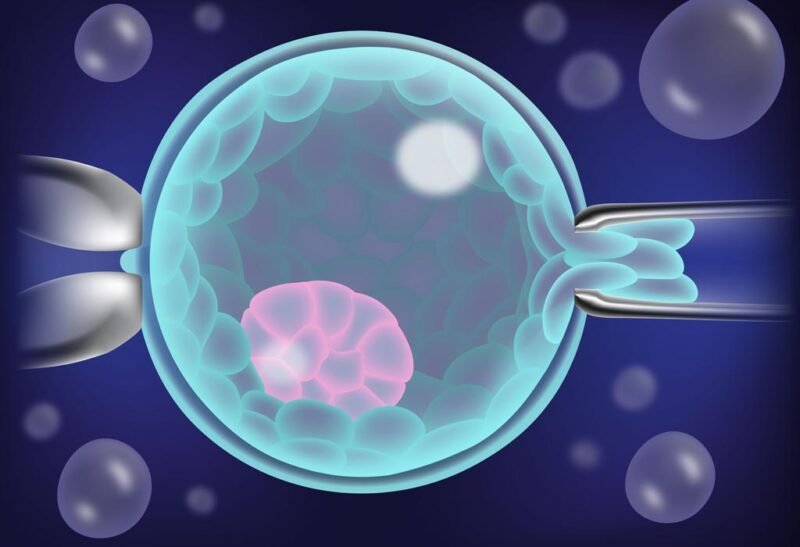
A pgt test (Preimplantation Genetic Testing for Aneuploidy) screens embryos for chromosomal abnormalities before transfer using a day 5–6 biopsy. The formal name is pgt a testing, and it checks all 23 pairs of chromosomes using next-generation sequencing.
Preimplantation genetic testing (PGT-A) aims to select euploid embryos for IVF to reduce aneuploid pregnancies.
How PGT-A works step-by-step
- IVF and blastocyst culture: eggs retrieved, fertilized, grown to day 5/6
- Biopsy: trophectoderm cells removed, embryo vitrified
- NGS analysis: lab counts chromosomes 1–22, X and Y
- Report: euploid (normal), aneuploid (abnormal), or mosaic (mix)
- Transfer: euploid embryo thawed in next cycle
The whole process adds about 2–3 weeks to your timeline.
What PGT-A tests for
- Trisomies: 21, 18, 13
- Monosomies
- Sex chromosome aneuploidies
- Large segmental gains/losses (>10 Mb)
It does not test for single-gene diseases (that’s PGT-M) or structural rearrangements (PGT-SR).
Does PGT-A improve IVF success? The honest answer
The data is nuanced — and you deserve both sides.
What early research showed:
Early trials showed better implantation and live birth rates with PGT-A. PGT-A effectively reduces futile transfers and pregnancy losses while maintaining reproductive potential. A review notes PGT-A reduces miscarriage risk, increases the success of IVF, shortens time to pregnancy, and reduces multiple gestation rates.
What recent studies show:
While earlier studies suggested higher live-birth rates with PGT-A in favorable-prognosis patients, recent trials found similar pregnancy outcomes between PGT-A and conventional IVF. The value of PGT-A in reducing clinical miscarriage remains unclear due to study limitations.
Large real-world data found PGT-A does not increase live birth rates but may reduce cumulative live birth rates in specific patient groups. Another analysis of 133,494 autologous cycles found no significant improvement in cumulative live birth rates per cycle start with PGT-A in women aged ≤40, but improved miscarriage rates.
Where PGT-A clearly helps:
- Advanced maternal age (38+): Preimplantation genetic testing for aneuploidy in IVF patients aged 38+ shows a shorter time to live birth, with 51.2% achieving live birth over 1 year, compared to 36.4% in younger patients
- Recurrent pregnancy loss: PGT-A showed improved outcomes in women with RPL and male infertility factors
- Few embryos, advanced age: PGT-A improved clinical pregnancy and live birth rates per transfer cycle in women of advanced reproductive age with ≤3 oocytes, with higher pregnancy rates (66.7% vs 12.4%) and lower miscarriage rates (14.3% vs 40.0%)
- Reducing transfers: A study comparing IVF with and without PGT-A in patients with one or two blastocysts shows PGT-A reduces ETs, miscarriages, and costs while maintaining cumulative LBR
Bottom line: PGT-A improves per-transfer success and reduces miscarriage, especially after 35. It does not always increase per-retrieval cumulative live birth, because biopsy and testing can discard embryos that might self-correct.
Benefits of pgt a testing
- Fewer miscarriages: select euploid embryos, lower loss rates
- Shorter time to pregnancy: avoid transferring aneuploid embryos that fail
- Single embryo transfer confidence: reduces twins risk
- Family planning: useful for patients with limited time or prior losses
- Better counseling: know embryo status before transfer
Limitations and risks
PGT-A is improving, with losses of implantation potential decreasing to 20–25% due to better techniques and reduced mosaicism, but challenges remain.
Key issues:
- Mosaicism: this article examines the efficacy of PGT-A, highlighting challenges with mosaicism detection and the need for improved diagnostic methods. Despite advancements, clinical validation remains unproven, and false positives can lead to euploid embryo removal
- Embryo damage: biopsy carries ∼1% risk
- Cost: significant add-on
- No guarantee: euploid embryos still fail 40–50% of the time
- Ethical concerns: discarding mosaic embryos that can result in healthy live births
Recent reviews suggest PGT-A should be offered selectively, not routinely, especially in younger good-prognosis patients.
Who should consider a pgt test?
Consider PGT-A if you are:
- Age 35–42, especially 38+
- History of recurrent miscarriage (≥2 losses)
- Repeated implantation failure (≥3 failed transfers)
- Severe male factor with high DNA fragmentation
- Want to do single embryo transfer and minimize miscarriage risk
Avoid or reconsider if:
- Under 35 with many high-quality blastocysts
- Using donor eggs from young donors (studies found donor oocyte recipients do not benefit from PGT-A to improve pregnancy outcomes)
- Only 1–2 embryos and unwilling to risk no transfer
Non-invasive PGT-A (niPGT-A): the future?
Non-invasive preimplantation testing offers a promising alternative by genetically analyzing embryos without biopsy, though challenges like cell origin and protocol consistency remain. New optimized niPGT-A procedures provide highly accurate chromosomal assessment and reduce embryo damage risk, but most Indian clinics still use trophectoderm biopsy in 2026.
PGT-A cost in India (2026)
Pricing varies by city, lab, and number of embryos.
From national sources:
- PGT-A (Aneuploidy Screening): ₹40,000 – ₹80,000 per embryo batch
- PGT-A testing costs ₹50,000 to ₹1,00,000 per IVF cycle depending on number of embryos
- Per cycle add-on: ₹30,000 – ₹80,000
- PGT-A: ₹40,000 — ₹80,000 per cycle
City-wise breakdown from Mumbai clinics:
- Trophectoderm biopsy (per embryo): ₹5,000–₹8,000
- NGS lab testing (per embryo): ₹12,000–₹22,000
- 4–6 embryo PGT-A cycle total: ₹70,000–₹1,20,000
- 7+ embryo cycle: ₹90,000–₹1,50,000
Full package context: A full IVF cycle plus PGT-A testing for 3–5 embryos in India typically costs ₹2,40,000–₹4,80,000, including IVF base (₹1,50,000–₹3,00,000), PGT-A at ₹30,000–₹60,000 per embryo, and biopsy fees.
Always ask for an itemized quote: biopsy fee per embryo, NGS fee, reporting, and re-biopsy policy.
The PGT-A process timeline
Day 0: Egg retrieval
Day 5–6: Blastocyst biopsy + vitrification
Day 7–14: NGS results
Next cycle: FET of euploid embryo
Total added time: 3–5 weeks.
FAQs about pgt a testing
Does PGT-A guarantee a baby?
No. It improves odds per transfer and reduces miscarriage, but euploid embryos still have ∼50–60% live birth rate depending on age.
Can mosaic embryos be transferred?
Yes, with counseling. Studies show mosaic transfers can still achieve live births. Many clinics offer mosaic transfer after informed consent.
Will PGT-A harm my embryos?
Modern laser biopsy has low risk, but losses of implantation potential are estimated at 20–25% due to biopsy and testing limitations.
How many embryos should I test?
Test all usable blastocysts. Cost-effectiveness improves when you have ≥3 embryos.
Is PGT-A worth it at 40+?
Most data supports yes for reducing time to live birth and miscarriage, even if cumulative LBR per retrieval is unchanged.
Should you do PGT-A?
Think of PGT-A as a tool, not a miracle.
Choose it if your priority is fewer transfers, lower miscarriage risk, and you are 35+ or have RPL. Skip it if you’re young, have many embryos, and want to maximize cumulative chance per retrieval while saving cost.
Talk to your embryologist about lab performance: euploidy rate by age, mosaicism rate, and re-biopsy policy. Ask for data, not just marketing.
PGT-A won’t create healthy embryos — it only helps you choose among the ones you already made. In the right patient, that choice shortens the path to a healthy baby.

