
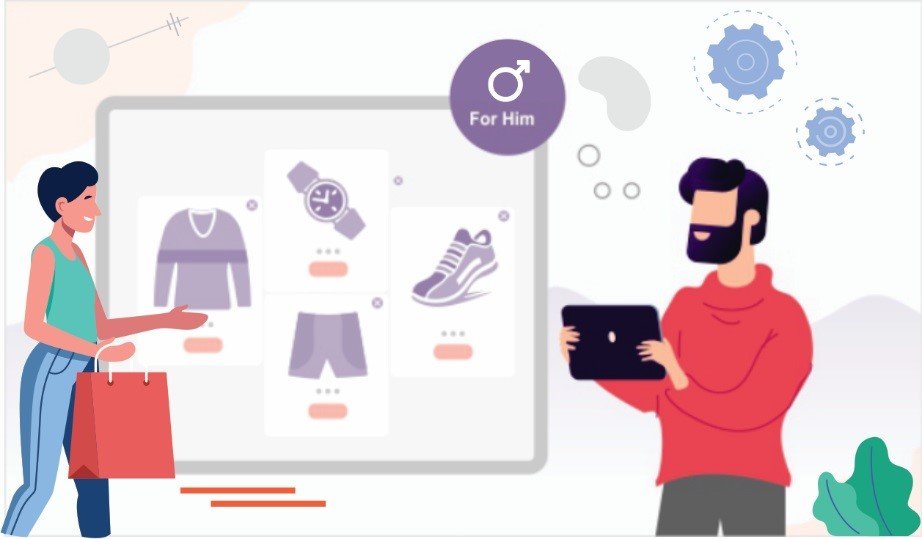

Ecommerce success today depends on how effectively businesses guide customers through the buying journey. Two of the most powerful tools for improving product discovery and driving conversions are product recommendations and search personalization. While both are impactful on their own, their true potential is unlocked when they work together.
At the center of this integration lies a customer data platform. By unifying customer data and enabling real-time insights, a customer data platform allows businesses to connect recommendations and search into a seamless, intelligent experience that drives higher engagement and revenue.
The Role of Product Recommendations and Search
Product recommendations and search personalization serve different but complementary purposes in the ecommerce journey.
Product recommendations are proactive. They guide users by suggesting relevant products based on behavior, preferences, and trends. These appear on homepages, product pages, emails, and checkout flows.
Search personalization, on the other hand, is reactive. It responds to user queries and helps them find what they are actively looking for. It is driven by intent and plays a crucial role when users have a specific goal.
Individually, both systems enhance product discovery. Together, they create a continuous feedback loop that improves relevance at every touchpoint.
The Problem with Disconnected Systems
Many ecommerce businesses treat product recommendations and search as separate systems. Recommendations may be powered by one tool, while search operates on another.
This separation leads to several issues:
- Inconsistent user experiences
- Lack of shared data between systems
- Missed opportunities to refine relevance
- Lower conversion rates
For example, a user may interact with certain products through recommendations, but this behavior may not influence their search results. Similarly, search intent may not inform future recommendations.
Without integration, valuable insights are lost.
Why a Customer Data Platform is Critical
A customer data platform acts as the foundation for connecting product recommendations and search personalization. It collects, unifies, and activates data from multiple touchpoints, creating a single view of each customer.
This unified data enables:
- Consistent personalization across channels
- Real-time updates based on user behavior
- Better understanding of customer intent
- Seamless integration between systems
With a customer data platform, both recommendations and search operate on the same data layer, ensuring alignment and consistency.
How Integration Improves Product Discovery
When product recommendations and search personalization work together, product discovery becomes more intuitive and efficient.
Shared Behavioral Insights
User interactions with recommendations, such as clicks and purchases, feed into search algorithms. This helps refine search results based on actual preferences.
Similarly, search behavior provides insights that improve future recommendations.
Continuous Learning Loop
Every interaction contributes to a feedback loop that improves personalization over time. The system becomes smarter with each user action.
Context-Aware Experiences
By combining data from both systems, businesses can deliver experiences that reflect both user intent and preferences.
For example, a user searching for a category may see results influenced by their past interactions with recommended products.
Driving Higher Conversions Through Integration
The ultimate goal of combining recommendations and search personalization is to drive conversions.
More Relevant Results
When both systems share data, users see products that are more aligned with their interests, increasing the likelihood of purchase.
Reduced Friction
Seamless transitions between browsing and searching reduce effort and improve the overall experience.
Better Upsell and Cross-Sell Opportunities
Search results can include personalized recommendations for complementary or higher-value products.
Increased Engagement
Users are more likely to explore and interact with content that feels tailored to their needs.
Key Use Cases
Homepage to Search Journey
A user engages with recommended products on the homepage. When they use the search bar, results reflect those interactions, creating a consistent experience.
Search-Driven Recommendations
Search queries reveal intent, which can be used to personalize recommendations across other touchpoints such as email or product pages.
Cart and Checkout Optimization
Recommendations based on both browsing and search behavior can be used to drive additional purchases during checkout.
Re-Engagement Campaigns
Data from search and recommendation interactions can be used to create personalized email campaigns that bring users back to the platform.
Best Practices for Integration
Centralize Data with a Customer Data Platform
Ensure that all customer interactions are captured and unified in one place. This is essential for consistent personalization.
Use Real-Time Data
Incorporate real-time signals to keep both search and recommendations relevant.
Align Algorithms
Ensure that both systems use similar data models and logic to maintain consistency.
Optimize for Performance
Fast loading times and responsive systems are critical for maintaining user engagement.
Continuously Test and Improve
Regular testing helps identify opportunities to refine integration and improve outcomes.
Challenges to Consider
Data Silos
Without proper integration, data may remain fragmented, limiting the effectiveness of personalization.
Complexity of Implementation
Integrating multiple systems requires technical expertise and careful planning.
Maintaining Relevance
Balancing personalization with product discovery is essential to avoid limiting user options.
Privacy Concerns
Businesses must ensure that data is used responsibly and transparently.
Addressing these challenges requires a strategic approach and the right technology stack.
The Role of AI in Unified Personalization
Artificial intelligence enhances the integration of product recommendations and search personalization by enabling:
- Real-time data processing
- Predictive insights
- Dynamic ranking of products
- Continuous learning and optimization
AI-driven systems can analyze large volumes of data and deliver highly relevant experiences at scale.
The Future of Connected Commerce Experiences
As ecommerce continues to evolve, the integration of recommendations and search will become more sophisticated. Future developments include:
- Hyper-personalized experiences based on real-time intent
- Integration with voice and visual search
- Seamless cross-channel personalization
- Deeper alignment with customer data platforms
These advancements will enable businesses to create more intuitive and engaging shopping journeys.
Conclusion
Product recommendations and search personalization are powerful tools on their own, but their combined impact is far greater. By integrating these systems through a customer data platform, businesses can create seamless, data-driven experiences that guide users from discovery to conversion.
In a competitive ecommerce landscape, the ability to deliver consistent and relevant experiences across touchpoints is a key differentiator. Businesses that connect recommendations and search effectively will be better positioned to drive engagement, increase conversions, and build long-term customer relationships.