
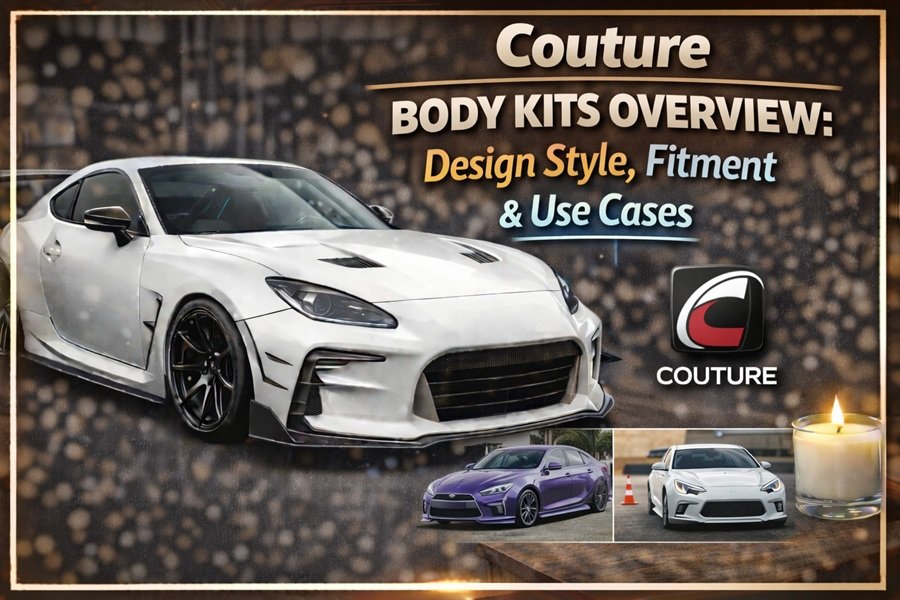

In the aftermarket aero industry, enthusiasts usually have to choose between two extremes: the brittle, high-definition lines of fiberglass or the wavy, unfinished look of cheap rubber. Couture body kits were engineered to occupy the “Sweet Spot”—offering the sophisticated, high-end designs typically reserved for luxury show cars but built with the rugged durability of high-quality polyurethane.
If you are looking to give your Infiniti, Lexus, or Corvette a “couture” makeover without fearing every speed bump, this guide breaks down everything you need to know about the brand.
1. The Design Philosophy: “Luxury-Sport”
While brands like VSAero focus on drift-inspired aggression, Couture leans into a Luxury-Sport aesthetic. Their designs are characterized by:
-
Integrated Lines: Rather than looking like “bolt-on” additions, Couture kits often mimic the factory body lines, making the car look like a high-performance “Special Edition” straight from the dealership.
-
Refined Aerodynamics: You’ll find smoother transitions, recessed vents, and sophisticated rear diffusers that complement high-end European and Japanese luxury sedans.
-
The “Couture” Signature: Most kits feature a black primer finish that is notably smoother than competitors, requiring less “fill work” before it hits the paint booth.
2. Material Excellence: Why Polyurethane?
The defining feature of a Couture body kit is its polyurethane construction. In the professional body shop world, polyurethane is the “Gold Standard” for street-driven cars.
The Benefits of Couture Polyurethane:
-
Impact Resilience: Because the material is flexible, it can absorb minor impacts (like a steep driveway or a stray piece of tire tread on the highway) and return to its original shape.
-
Memory Technology: If a Couture bumper is deformed during shipping, you don’t need to send it back. Simply applying moderate heat (around 60°C to 70°C) allows the molecular structure of the plastic to “remember” its mold and snap back into place.
-
Weather Resistance: Unlike fiberglass, which can become brittle in extreme cold or expand/crack in extreme heat, polyurethane remains stable across a wide temperature range.
3. Fitment Expectations & Installation
As an expert strategist in this niche, I must be candid: “Polyurethane does not mean ‘Bolt-on’ without effort.” While Couture kits are significantly easier to work with than FRP, there are specific installation realities:
| Installation Step | What to Expect |
| Out-of-the-Box | May appear slightly warped due to shipping; requires “heat-setting” to straighten. |
| Trimming | Minor trimming of “flashing” (excess plastic from the mold) is standard. |
| Drilling | Mounting holes are usually marked but rarely pre-drilled to ensure a tight, custom fit. |
| Hardware | Usually requires 3M double-sided tape and self-tapping screws (not always included). |
Pro Tip: To achieve “Couture” level fitment, always perform a Full Dry Fit before painting. This allows you to check the gaps around headlights and fenders while the material is still raw.
4. Ideal Use Cases: Who is it for?
The Daily Driver
If your car is your primary mode of transportation, Couture is arguably the best choice on the market. The ability to scrape a curb without shattering your front bumper into a thousand pieces is an invaluable peace of mind.
The “VIP” Style Build
Couture is a staple in the VIP (Bippu) car scene. Their kits for the Lexus LS/GS and Infiniti M/Q series provide that low-slung, grounded look that defines the “Executive Sport” aesthetic.
The Occasional Track Enthusiast
While not as lightweight as dry carbon fiber, Couture kits are excellent for track days where “off-track” excursions are possible. The durability ensures you can drive the car home even if you have a minor run-in with a cone or a gravel trap.
5. Pros and Cons at a Glance
Pros:
-
Virtually Unbreakable: High-density polyurethane is incredibly tough.
-
Resale Value: Maintains a cleaner look over time compared to cracked fiberglass.
-
Lower Shipping Costs: Many Couture parts can be folded into smaller boxes (safely!) to save on freight.
Cons:
-
Weight: Heavier than fiberglass or carbon fiber.
-
Paint Adhesion: Requires a specific “adhesion promoter” and flex-agent in the paint to prevent spider-webbing.
Final Verdict
Couture body kits provide the best balance of style and survival. They are designed for the enthusiast who wants their car to look like a million bucks but still needs to drive it through the real world.